
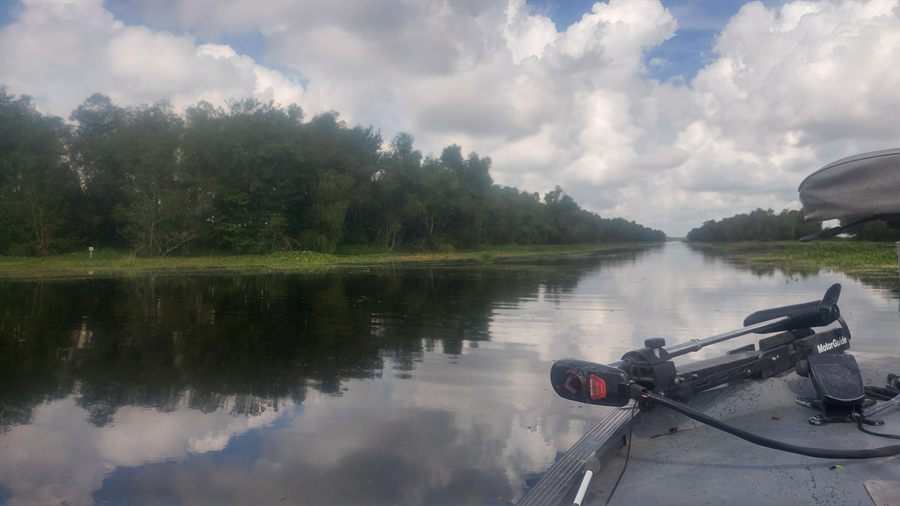
After days of unsettled weather, flooded roads, rough windows, and radar-watching, southeast Louisiana is moving into the next problem: heat.
That does not mean the weather is suddenly harmless. For boaters, anglers, marina workers, guides, seafood workers, and anyone spending hours around ramps, docks, marshes, and open water, the first hot stretch after stormy weather can be its own kind of hazard.
The National Weather Service office in New Orleans/Baton Rouge said Tuesday that the rain pattern was easing as high pressure built into the area. With more sun, highs were expected to climb into the lower to mid-90s, with a very humid air mass pushing heat index values from the lower 100s to just under 110 degrees. The highest heat index values were expected around the tidal lakes.
That matters on the water.
A lot of Louisiana boaters are used to heat. That can make it easier to underestimate. But heat after rain is different from a clean, dry summer day. The air feels heavier. Ramps can still be busy or disrupted. Water may still be dirty, high, moving oddly, or carrying debris. Afternoon storms may still be possible even when the broader pattern improves. People who lost fishing time to weather may also be tempted to force a trip into the first decent-looking window.
That is where mistakes happen.
For recreational anglers, the practical issue is not just whether the fish are biting. It is whether the day is worth the heat load. A short morning trip may make more sense than trying to grind through the middle of the day. A protected-water plan may be better than a long open-water run. A backup ramp may matter if flooding, debris, or local closures are still affecting access.
For guides and working-water crews, the concern is different. They may not have the same freedom to simply skip a day. Heat becomes a jobsite issue. Long hours on a deck, repeated bending and lifting, low wind around docks, and reflected heat from fiberglass, aluminum, pavement, and concrete can wear people down faster than expected.
The same applies at the ramp. Heat problems do not only happen ten miles from the launch. They happen while loading the boat, waiting in line, changing a tire, helping a child with a life jacket, dealing with a dead battery, or sitting in the sun while another crew blocks the ramp.
This is the part of boating safety that does not always get treated with the same seriousness as storms, lightning, alcohol, or life jackets. But heat is not just discomfort. It changes judgment. It shortens tempers. It makes people rush. It turns small mechanical problems into bigger ones because nobody wants to stand in the sun and think clearly.
The best advice is simple, but it only works if people actually follow it.
Leave earlier. Bring more water than you think you need. Keep drinks easy to reach, not buried under gear. Watch kids and older boaters closely. Take shade seriously. Do not wait until someone feels bad to slow down. If the plan requires pushing through the worst heat of the day, ask whether the plan is worth it.
Also, do not let a sunny sky erase what the last round of weather did to the water. Rain can leave behind dirty drains, floating debris, high water, strange current, and soft shoulders around ramps and parking areas. A place that was easy last weekend may be different after several days of weather.
For anglers, this is where patience matters. The first calm-looking day after a rough stretch can be tempting, but it may not be the best fishing day or the safest boating day. Sometimes the right move is a short scouting trip, a protected launch, or waiting for water to settle.
For Louisiana's working coast, this pattern is familiar: storms first, heat next, then the slow sorting-out of what changed. Roads dry. Ramps clear. Water cleans up. Bait moves. People get back to work.
But the transition period deserves respect.
The heat coming after the rain is not a reason to panic. It is a reason to plan like the weather still matters, even when the radar finally looks quieter.
Source record
Sources checked include the National Weather Service New Orleans/Baton Rouge forecast discussion and local weather messaging for June 23, 2026.
Reader Response
Have a local correction, firsthand detail, or respectful response?
Send it to LAInshore.com. Include the article title, what you saw or know, and any source, photo, document, or public record that helps verify it. Useful reader responses may inform corrections, updates, or follow-up reporting.
Send a response