
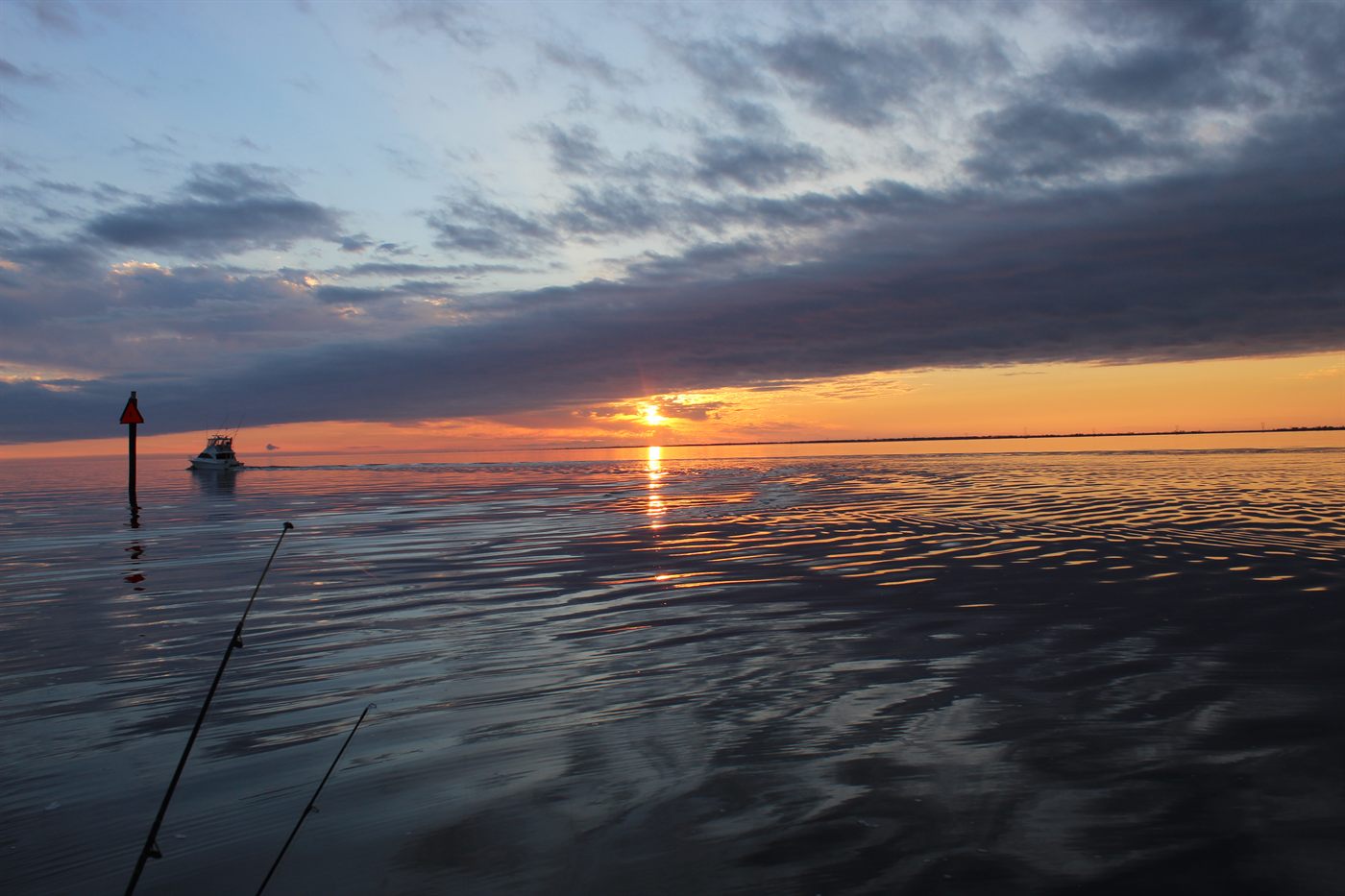
Forward-facing sonar has made it to the Louisiana marsh.
Not everywhere. Not on every boat. Not in every canal, pond, bayou and broken shoreline. But it is here, and it is already changing the parking-lot argument.
Some anglers see it as the next useful tool. Some see it as another expensive arms race. Some think it belongs on tournament bass boats and crappie rigs, not on the front deck of a bay boat looking for trout, reds or fish stacked around a bridge. Some do not care either way until somebody with three screens pulls up on a school they were drifting.
That is usually how new fishing technology becomes controversial.
Not when it exists.
When it starts showing up in the same water everybody else uses.
Forward-facing sonar is no longer just a tournament-lake tool. It is moving into Louisiana inshore fishing, but its usefulness here is more complicated than the hype. The marsh is shallow. The water moves. Grass, bait, current, mud, pilings, shell, crab traps and boat control all matter. Seeing fish is not the same thing as catching them.
Still, the technology is real. So is the debate.
What forward-facing sonar actually does
Traditional sonar mostly shows what is under the boat or what the boat has passed over.
Forward-facing sonar is different. It shows a live, real-time view of what is happening in front of or around the transducer. Depending on the setup and view, an angler may see fish, bait, structure, bottom changes and sometimes even a lure moving through the water.
In plain English, it lets you look ahead instead of just looking down.
Garmin LiveScope, Humminbird MEGA Live and Lowrance ActiveTarget are the major systems anglers talk about most. Each brand describes the same general promise: live views of fish and structure, with the ability to watch fish and bait respond in real time.
That last part is what changed the conversation.
Side imaging helped anglers find structure. Down imaging helped them understand what was under the boat. Mapping helped people line up routes, ledges and reefs.
Forward-facing sonar lets an angler watch the target.
That is why it became so powerful in bass, crappie and walleye fishing. It can turn a blank-looking piece of water into a screen full of information. It can show suspended fish that would have been hard to locate. It can show whether fish are present, how they are positioned, and whether they react to a lure.
In Louisiana inshore fishing, that can matter.
But only in the right situations.
Where it helps in Louisiana water
Forward-facing sonar is probably most useful in Louisiana when the fish are relating to something definable or suspended in a way the screen can separate from the noise.
Bridges are the obvious example.
A bridge has pilings, shadow lines, current seams, bait, depth changes and fish that may suspend or stack in predictable areas. A forward-facing unit can help an angler see fish around pilings, off the edge of the structure, or suspended away from where people normally cast. It can also show whether a fish followed and refused a bait.
Deep holes are another fit.
In bayous, passes and canals, fish may hold in bends, drains, scour holes, drop-offs and wintering areas. Forward-facing sonar can help find fish off the bank, away from the visible cover, or suspended in water that would otherwise be blind casting.
Docks, bulkheads, ledges and reefs can also make sense.
If the structure is defined and the water is deep enough to work with, the unit may help an angler line up casts more precisely. That does not mean the fish will bite. But it can reduce guessing about whether fish are there.
Schools are another use.
Trout, white trout, redfish, black drum, jacks, stripers in some systems, and mixed bait-and-predator activity can all show on live sonar under the right conditions. If fish are moving under birds, along a shell edge, around a bridge or off a channel drop, forward-facing sonar can help an angler stay with them longer.
That matters in open bays where the difference between "they disappeared" and "they slid 40 yards off the line" can be a full box or a dead drift.
Where the hype breaks down
The first mistake is assuming dirty water kills forward-facing sonar.
Dirty water can matter for fishing, but sonar is not eyesight. It uses sound, not light. Muddy water does not automatically make the screen useless the way it makes sight-fishing impossible.
The bigger problems in Louisiana are usually shallow water, clutter, current, grass, boat control and fish behavior.
Shallow water compresses the useful window. In three feet of water, there is not much vertical space to separate fish, bottom, grass, bait and prop wash. A redfish pushing a pond edge may be easier to catch by reading wakes, nervous bait and shoreline movement than by staring at a screen.
Grass and soft bottom can create clutter. So can bait clouds, shell, debris, crab traps, pilings and rough water. The more chaotic the environment, the more skill it takes to understand what the screen is showing.
Current can make things harder too. In moving water, the boat, bait, lure and fish may all be shifting at once. A bridge bite with current is a good use case, but it also demands control. If the boat cannot hold position, the screen becomes another distraction.
Boat control is the hidden cost.
Forward-facing sonar works best when the transducer is pointed where the angler needs it, the boat is stable enough to interpret what is happening, and the cast can be made to the target. That is easier on a trolling-motor bass boat in a lake pocket than on a windy Louisiana shoreline with tide, chop and a bay boat catching hull slap.
Fish behavior matters too.
A lot of Louisiana marsh fishing is not about individual fish sitting in open water waiting to be targeted. It is about movement: shrimp flushing, bait sliding through a drain, reds crawling a bank, trout using current seams, fish pushing shoreline grass, schools moving with tide, and short feeding windows that do not look like a video-game screen.
In those situations, old skills still win.
Reading water. Reading bait. Reading tide. Knowing when to leave.
Forward-facing sonar may help. It does not replace that.
The money problem
The cost is not just the transducer.
A realistic forward-facing sonar setup can include the live sonar module or black box, the transducer, compatible display unit, wiring, mount, pole or trolling motor mount, battery capacity, installation parts, software updates and time spent learning the system.
For many Louisiana anglers, that is the problem before the first cast.
The technology can easily turn into a multi-thousand-dollar decision. And once one angler upgrades, another starts thinking he needs to upgrade too. That is where the "arms race" complaint comes from.
It is not only jealousy. It is access.
Louisiana has a strong blue-collar fishing culture. A lot of people are running older hulls, repaired trailers, used motors and gear bought on sale. When a fishing advantage costs more than some people's entire rig, it changes the feel of the game.
That does not mean people who buy the technology are wrong. Anglers have always spent money on better gear: GPS, trolling motors, Power-Poles, shallow-water anchors, mapping chips, side imaging, jack plates, lithium batteries, better rods, better reels and better boats.
But forward-facing sonar is different because it appears to make the fish themselves visible.
That perception matters, even when the reality is more complicated.
The pressure question
The biggest concern is pressure.
If more anglers can find fish that used to be harder to locate, especially suspended fish or schools holding off obvious structure, does that increase harvest pressure? Does it make community fish easier to target? Does it shrink the water by making hidden fish less hidden?
Those are fair questions.
The answer is not simple.
Seeing fish does not guarantee catching fish. A fish on the screen may refuse everything. Trout may move. Reds may spook. A school may be bait, mullet, drum, catfish or something else the angler misreads. The screen can also make people stubborn, burning time on fish that will not eat because they cannot walk away from what they can see.
Still, it is hard to argue the technology has no effect.
Tournament organizations in freshwater bass fishing have already treated forward-facing sonar as important enough to regulate. B.A.S.S. announced a 2026 Elite Series format in which forward-facing live sonar is allowed in up to five of nine regular season events and prohibited in the remaining events. Major League Fishing also adopted limits on forward-facing and 360-degree sonar transducers and screen configurations for 2025.
That does not mean Louisiana should copy bass tournament rules. It does mean the pressure and fairness debate is not imaginary.
In sources checked for this article, LAInshore.com did not find a general statewide Louisiana recreational inshore rule aimed specifically at forward-facing sonar. Anglers should still check current LDWF regulations and any tournament-specific rules before assuming anything.
The more likely near-term issue is not state regulation.
It is social friction.
The ethics question
Every generation of anglers argues over the tool that came after theirs.
Somebody thought GPS ruined fishing. Somebody thought trolling motors changed too much. Somebody thought Power-Poles made people lazy. Somebody thought side imaging gave away too much. Somebody thought braided line, mapping apps, online reports and YouTube did more damage than any fish finder.
Forward-facing sonar is the newest version of that fight.
Supporters say it is just another tool. They argue it helps anglers learn faster, reduces wasted time, improves precision, teaches fish behavior, and lets people make better decisions. A working person with one morning to fish may appreciate knowing whether a bridge has fish before spending two hours guessing.
Critics say it changes the spirit of fishing. They see screen-watching replacing water-reading. They worry about expensive technology separating haves from have-nots. They worry about pressured fish getting less refuge. They worry that the more precise fishing gets, the smaller public water feels.
Both sides have a point.
The problem with calling it "cheating" is that most modern fishing already depends on technology. The problem with saying "it is just a tool" is that not all tools change the sport equally.
Forward-facing sonar is not magic.
It is also not nothing.
Skill did not disappear. It moved.
The best middle-ground answer is this: forward-facing sonar changes what skill looks like.
It does not remove skill.
An angler still has to know where to start. He still has to control the boat. He still has to aim the transducer. He still has to interpret the screen. He still has to cast accurately. He still has to choose the bait, depth, retrieve angle, line size and timing. He still has to decide whether the fish are catchable or just visible.
That is a real skill set.
But it is a different skill set than older marsh fishing, where the screen was secondary and water-reading carried more of the load.
The worry is not that skill disappears. The worry is that some traditional skills become less important in certain situations, especially around deeper structure, suspended schools and tournament-style fishing.
In shallow ponds, grass lines, broken marsh, drains and muddy shorelines, the old skills still matter most. In deeper bayous, bridges, docks, reefs and winter holes, the screen may matter more.
That is why Louisiana's answer will not be one-size-fits-all.
Who adopts it first
Guides, serious weekend anglers and tech-heavy fishermen will adopt forward-facing sonar faster than casual marsh anglers.
That is not complicated.
Guides can justify gear if it helps clients catch fish or learn. Tournament anglers chase every edge. Serious weekend fishermen already spending on lithium batteries, high-end trolling motors and multiple displays may see forward-facing sonar as the next logical upgrade.
Casual marsh anglers may be slower.
If a person mostly fishes shallow ponds, bank lines, drains and visible bait, the payoff may not be worth the cost. If his boat control is limited, the screen may frustrate more than help. If his fishing is built around redfish in skinny water, he may gain less than a trout angler who lives around bridges and deeper shell.
That is the practical answer.
Forward-facing sonar is useful, but not equally useful everywhere.
What anglers should watch next
Watch tournament rules.
Even if LDWF does not regulate forward-facing sonar, local circuits may. Some may allow it. Some may restrict it. Some may create separate divisions. Some may do nothing until participation drops or complaints get loud.
Watch guide behavior.
When more guides start mounting the units, clients will learn from them. That may accelerate adoption faster than product ads.
Watch bridge and winter-hole pressure.
The technology's biggest inshore impact may show up where fish concentrate: deep holes, bridge systems, docks, reefs and suspended schools. Places that already get pressure may feel smaller.
Watch the used market.
As newer units come out, older forward-facing systems will get cheaper. That is when the technology moves from early adopters to regular anglers.
Watch the culture.
If anglers use it quietly, release fish well, follow limits and avoid crowding, the debate may stay manageable. If the technology becomes tied to pressure, tournament conflict, spot burning or meat-haul behavior, the backlash will grow.
And watch your own fishing.
If a screen helps you understand why fish set up on a bridge piling, why they followed but did not eat, or where a school slid after the birds left, that is useful.
If it makes you stare at pixels while missing birds, tide lines, slicks, wakes, nervous bait and a shoreline that is starting to come alive, it may be teaching the wrong lesson.
Forward-facing sonar has reached the Louisiana marsh.
It is not going away.
But the marsh is still the marsh. It is shallow, dirty, windy, grassy, tidal, stubborn and full of fish that do not care what you paid for your electronics.
The screen may show you more.
It will not fish for you.
Source record
Sources checked include Garmin LiveScope materials, Lowrance ActiveTarget materials, an industry announcement on Humminbird MEGA Live, B.A.S.S. and Major League Fishing sonar rule announcements, Associated Press reporting on the broader forward-facing sonar debate, and LDWF recreational fishing regulation pages. LAInshore.com did not find a statewide Louisiana recreational inshore rule specifically restricting forward-facing sonar in the sources checked.
- Garmin LiveScope sonar overview
- Garmin LiveScope Plus announcement
- Lowrance ActiveTarget live sonar announcement
- In-Fisherman: Humminbird MEGA Live Imaging announcement
- B.A.S.S. 2026 live sonar rule change
- MLF 2025 forward-facing sonar rules
- Associated Press: forward-facing sonar debate
- LDWF recreational fishing page
- LDWF seasons and regulations page
- 2026 Louisiana recreational fishing regulations
Reader Response
Have a local correction, firsthand detail, or respectful response?
Send it to LAInshore.com. Include the article title, what you saw or know, and any source, photo, document, or public record that helps verify it. Useful reader responses may inform corrections, updates, or follow-up reporting.
Send a response