Interview File
About This Interview
- Participant
- Rick Owens
- Current Role
- Advocacy Director, Louisiana Wildlife Federation
- Background
- Retired LDWF Enforcement Major, U.S. Coast Guard-licensed captain and Louisiana saltwater charter guide
- Series
- Where Fishermen Fit — Interview 004
Series Note
Editor’s Note
Rick Owens submitted his responses in writing. They have been edited for punctuation, clarity, consistency and length while preserving his positions and intended meaning.
Owens also provided a detailed introduction explaining the experience behind his perspective. Because of the length and substance of his submission, LAInshore.com is publishing his complete written response on a separate page.
Read Rick Owens’ complete written response.
Every participant in Where Fishermen Fit receives the same five questions and an opportunity to answer them in their own words. Publication does not imply endorsement by LAInshore.com.
A Career Spent Around Louisiana’s Natural Resources
Rick Owens has viewed Louisiana’s fisheries and conservation debates from several sides.
He spent more than 30 years with the Louisiana Department of Wildlife and Fisheries’ Enforcement Division, beginning as a field agent and eventually serving as an Enforcement Major responsible for statewide operations. During his career, he also worked as a district supervisor, regional supervisor, academy instructor and legislative liaison.
Today, Owens serves as Advocacy Director for the Louisiana Wildlife Federation. His work includes representing the organization before the Legislature, state agencies and conservation advisory groups.
He is also a U.S. Coast Guard-licensed captain and Louisiana saltwater charter guide.
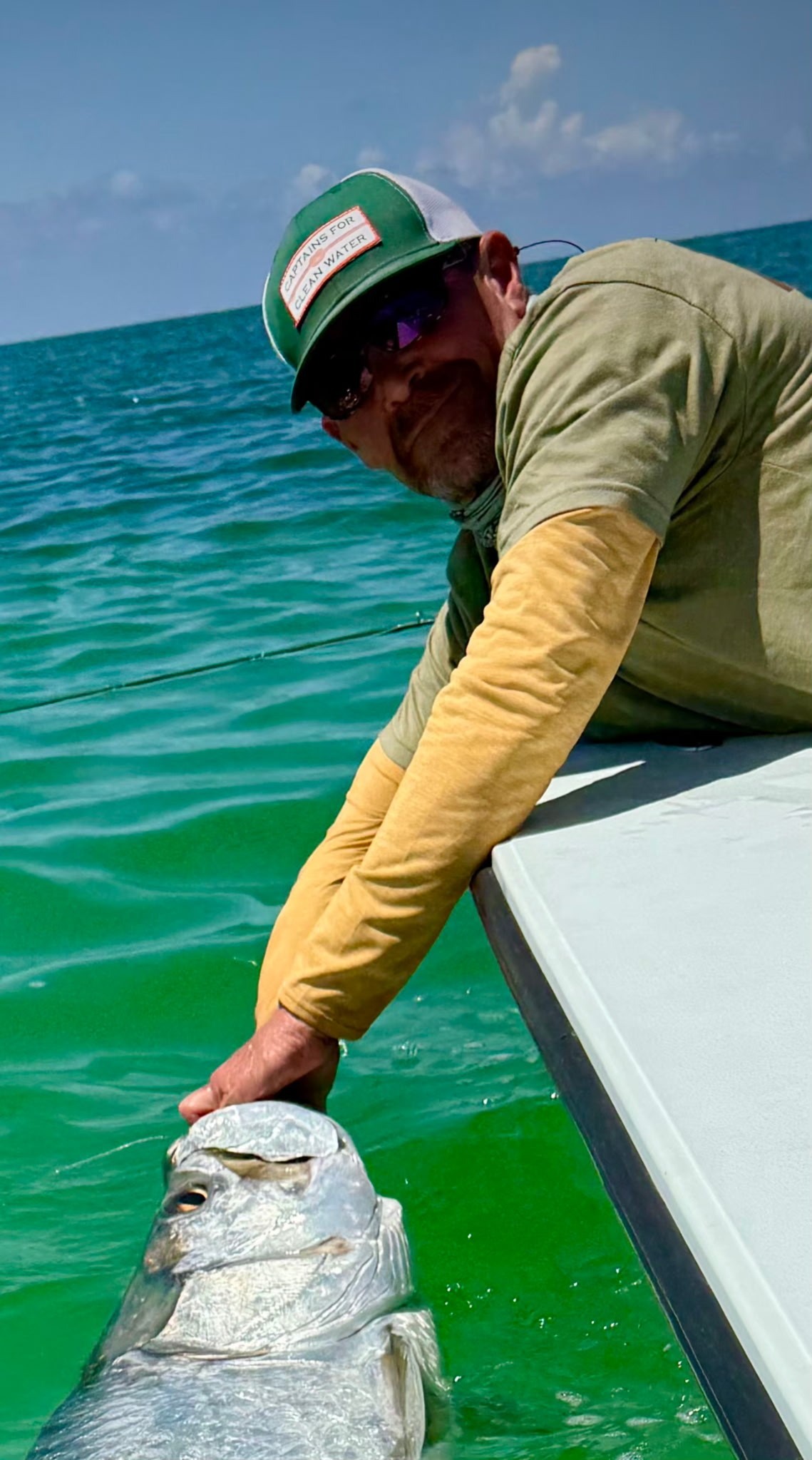
Those roles have placed him alongside commercial fishermen, recreational anglers, charter captains, landowners, hunters, scientists and policymakers—groups that often depend on the same resources but do not always agree about how those resources should be managed.
Owens said decades spent working Louisiana’s marshes and waterways have left him with one recurring question:
“Are we leaving the resource better than we found it?”
Rick Owens
“I’ve worked marshes that no longer exist, and I’ve patrolled waterways that have changed dramatically over three decades,” Owens wrote. “I’ve watched fisheries decline and become harder to manage in many areas, and I’ve seen habitat disappear in places that once represented some of the best fisheries in the world.”
Owens does not believe Louisiana must choose between conservation and economic development. He considers fishing, energy production, ports, agriculture, forestry, tourism and industry important parts of the state.
His concern is that conservation is too often considered after major economic and political decisions have already been made.
“Not to make projects harder,” Owens wrote. “To make Louisiana better.”
That argument runs through his responses to all five questions in this installment of Where Fishermen Fit.
Question One
What role do Louisiana’s commercial and recreational fishermen play in the identity, economy, and culture of this state?
“I’ve never believed this should be a conversation about commercial fishermen versus recreational fishermen,” Owens wrote. “Louisiana wouldn’t be Louisiana without either one.”
Commercial fishing helped build many of the state’s coastal communities and continues to support families that have worked Louisiana waters for generations.
Recreational fishing supports another broad network of guides, marinas, hotels, restaurants, boat dealers, manufacturers and small businesses. It is also one of the ways many Louisiana residents first develop a connection to the outdoors.
“I still remember the excitement of catching fish as a boy. I see that same excitement today when a child catches their first bass, redfish or speckled trout. That’s where conservation begins.”
Rick Owens
Owens believes recreational interests do not always receive equal consideration during major fisheries and legislative discussions.
Commercial production, seafood and coastal employment are important, he said. Recreational fishing, however, also generates economic activity, supports tourism and jobs, and contributes to conservation through license purchases and federal excise taxes.
“Those values deserve to be part of the conversation from the beginning,” Owens wrote, “not after the discussion has already shifted toward protecting commercial production and jobs.”
He pointed to the 2026 proposal to add Atlantic tarpon to Louisiana’s statutory definition of saltwater game fish.
The proposal did not establish a new recreational harvest restriction. Owens and other supporters described it as formal recognition of tarpon’s value as a sport fish and a possible foundation for future conservation and management.
The measure advanced through the Legislature without an opposing vote but was vetoed by Gov. Jeff Landry.
“The Legislature recognized that, and the bill passed unanimously through every committee and floor vote,” Owens wrote. “Governor Landry reached a different conclusion, and I respect his authority to do that.”
Owens said he appreciated that the governor left open the possibility of further discussion.
“Recreational anglers deserve an equal seat at the table,” he wrote. “Not because commercial fishing is less important, but because both are using the same public resource.”
He does not believe either side benefits when fisheries discussions become a contest over which group produces greater economic value.
Instead, he argues that the conversation should begin with the health and productivity of the resource supporting both groups.
“Healthy fisheries don’t exist because we need jobs. Jobs exist because we have healthy fisheries.”
Rick Owens
Improving estuaries, protecting habitat, using available scientific research and managing for the long term would benefit commercial and recreational fishermen alike, Owens said.
Failing to do so, he argued, would leave both groups competing over fewer fish, fewer opportunities and fewer productive places.
“It’s not commercial versus recreational,” Owens wrote. “It’s all of us leaving the resource in better condition than we found it.”
Question Two
Why are Louisiana’s wetlands important to both working-water families and recreational anglers?
Owens said the question extends beyond wetlands alone.
“To me, I would say it is more about healthy estuaries than just wetlands,” he wrote. “Our estuary systems are what make Louisiana truly different.”
Those systems include marsh ponds, oyster reefs, submerged grass beds, tidal creeks and the places where fresh water and salt water meet.
Together, they support shrimp, oysters, blue crabs, redfish, speckled trout, flounder, menhaden, tarpon, waterfowl and many other species. Owens also pointed to their roles in water quality and coastal storm protection.
“When people hear ‘estuary,’ they sometimes think of a map or a definition. I think of places I’ve spent a lifetime working—marsh ponds at daylight, oyster reefs, submerged grass beds, tidal creeks, and places where freshwater and saltwater come together.”
Rick Owens
Owens said he has watched those systems change throughout his career.
“Some of those changes are natural,” he wrote. “Many aren’t.”
He has seen marsh disappear, productive waters become harder to manage and habitat decline through a series of individual projects and decisions.
Owens does not blame one industry or one policy for every problem. He believes the larger failure is that conservation is often discussed only after important decisions have already been made.
He applies that concern to Louisiana’s current period of industrial and economic expansion.
Owens supports new investment and believes it can benefit the state. He also believes Louisiana is missing opportunities to make conservation part of the agreements surrounding major projects.
When Louisiana provides tax incentives, infrastructure, permitting support or other assistance, he believes officials should also ask whether a project can improve nearby habitat, restore wetlands, improve water quality, support a neighboring wildlife management area or refuge, or expand public access where appropriate.
“Those aren’t unreasonable expectations,” Owens wrote. “They’re missed opportunities.”
He said conservation should become part of Louisiana’s economic-development platform rather than something considered after construction is complete.
The same broader approach should apply to fisheries, he said.
Louisiana frequently debates individual species such as shrimp, oysters, menhaden, speckled trout and redfish. Owens believes those discussions can lose sight of the systems supporting all of them.
“Healthy estuaries produce every one of those fisheries. Improve the estuary and you improve every species that depends on it.”
Rick Owens
Owens argued that when habitat declines, fisheries managers may become more dependent on harvest restrictions and other controls because the resource is no longer producing at its former level.
He described habitat decline as a problem underlying many of Louisiana’s individual fisheries debates.
Habitat is also something the state has the ability to improve, he said, provided it becomes a serious priority in major decisions.
Question Three
What should Louisiana prioritize when balancing coastal restoration, fishery management, commercial livelihoods, recreational access, private property, and environmental protection?
“To me, this is the question behind every natural-resource discussion in Louisiana today,” Owens wrote.
He does not believe the answer is to choose one interest and dismiss the others.
“It’s finding a better balance than we’ve had in recent years.”
Owens acknowledged why these discussions become difficult. Nearly every decision affects someone’s employment, business, property or traditions.
Every proposal has supporters and opponents, he said. That is part of representative government.
His concern begins when scientific information is acknowledged but not allowed to meaningfully guide the final decision.
Louisiana invests in biologists, fisheries scientists, foresters, coastal experts and the research they produce. Owens believes that information should carry more weight when policy discussions turn toward economics.
“Sometimes I leave committee meetings wondering why we spent so much money collecting data if we’re unwilling to let it guide the conversation once the discussion turns to economics,” he wrote.
Owens cited Louisiana’s continuing menhaden debate.
The state funded research into purse-seine bycatch. Owens also cited an LDWF economic analysis that, according to materials used during the debate, estimated that approximately 85 percent of Louisiana’s menhaden harvest was already occurring more than one mile from shore.
Owens believes such findings should form the starting point for policy discussions.
“Jobs matter. No one disputes that,” he wrote. “But science should help us find solutions, not simply become an afterthought in the debate.”
He also believes Louisiana should broaden how it measures the value of its natural resources.
Commercial landings, harvest totals and processing jobs are relatively easy to count. Other benefits are harder to place into an economic report.
“How do you measure the value of a father teaching his daughter to catch her first fish? The economic impact of a charter captain introducing visitors to Louisiana? The value of healthy public lands, wildlife watching, or simply having abundant wildlife available to future generations?”
Rick Owens
Those values are real, he said, even when they are difficult to quantify.
Owens again pointed to tarpon as an example. The species does not support a meaningful commercial harvest in Louisiana but carries recreational, historical and cultural importance.
“Recreational fishing, including tarpon, deserves an equal seat at the table,” he wrote. “Not a larger seat. An equal one.”
Owens believes Louisiana could become a national leader by showing that conservation and economic development can work together.
In his view, that would require major projects to leave surrounding habitat stronger, fisheries decisions to begin with the long-term health of the resource and legislative debates to ask more than how much can be harvested while maintaining a minimum population.
“If every legislative discussion asks how we can leave Louisiana better than we found it,” Owens wrote, “then 20 years from now we’ll realize we made some good decisions.”
Question Four
Are there any fisheries, access, coastal, seafood, or working-water issues you believe Louisiana residents should be watching closely?
Owens did not identify one fishery or one piece of legislation that residents should follow above all others.
Instead, he encouraged people to watch Louisiana’s overall direction.
“Nearly every major issue we discuss today is connected,” he wrote. “Fisheries management, coastal restoration, public lands, water quality, forestry, private property, carbon capture, industrial development and public access—they all eventually come back to the same question.”
That question, he said, is what kind of Louisiana the state is leaving behind.
After more than 30 years around Louisiana’s natural resources, Owens said it is difficult to identify many species or systems facing less pressure than they did at the beginning of his career.
As examples, Owens pointed to closer management of redfish and speckled trout, continuing difficulties involving shrimp, blue crabs and oysters, declining numbers of ducks wintering in Louisiana, coastal land loss and water-quality concerns in multiple watersheds.
“Those aren’t isolated issues,” Owens wrote. “They’re symptoms of something larger.”
Louisiana has traditionally measured success through production—how much seafood is landed, how many jobs are created and how much industrial investment enters the state.
Owens believes Louisiana should add another measurement:
“Is the underlying resource becoming stronger or weaker?”
Rick Owens
He returned to industrial recruitment as an example of where that question could be asked more often.
Louisiana negotiates tax incentives, infrastructure, utility capacity, permitting certainty and other support for major developments. Owens believes conservation improvements should become part of those discussions.
A project might support marsh restoration, water-quality improvements, public access, fisheries research or habitat work on a nearby wildlife management area or refuge.
Those investments might be small compared with the overall size of a major development, he said, but their cumulative effect across Louisiana could be substantial.
“Not conservation instead of economic development,” Owens wrote. “Conservation as part of it.”
Owens also urged residents to pay attention to public access.
Traditional hunting and fishing places continue to disappear or become unavailable. That makes wildlife management areas, national wildlife refuges, state forests, Kisatchie National Forest and public waterways increasingly important.
“Those places belong to every citizen,” he wrote. “They create opportunity regardless of income, introduce children to hunting and fishing, and support birdwatchers, hikers, paddlers, photographers and campers.”
Those places do more than provide recreation, he said. They help define Louisiana’s identity.
Owens also emphasized the importance of young people.
“Young hunters become future conservationists,” he wrote. “Young anglers become future advocates for clean water.”
That connection does not happen automatically, he said. It begins when someone takes the time to bring a child hunting, fishing or exploring.
“That’s worth protecting.”
Question Five
What message would you like to share with Louisiana fishermen, seafood workers, guides, anglers, and coastal families trying to protect both their livelihoods and traditions?
“After more than 30 years in conservation, I’ve learned that most people want exactly the same thing,” Owens wrote. “Healthy resources. Good jobs. Opportunities for their children. The chance to continue the traditions they grew up with.”
Commercial fishermen, recreational anglers, guides and biologists may disagree about how fisheries should be managed, but they all depend on productive resources.
“Those goals aren’t very different,” Owens wrote. “Where we sometimes struggle is deciding how to get there.”
Owens does not believe Louisiana should have to choose between being a Working Coast and being the Sportsman’s Paradise.
“We ought to be able to be both.”
Rick Owens
The Working Coast and the Sportsman’s Paradise both exist because of Louisiana’s natural resources, he said. One should not replace the other.
“They should be able to coexist and strengthen one another.”
Owens believes conservation should not automatically be viewed as something that slows progress. He argues that conservation measures should instead be incorporated into the way Louisiana plans and evaluates development.
When Louisiana recruits major industry, the state should consider how that project could also improve habitat. Fisheries decisions should begin with the long-term health of the resource. Coastal restoration should account for entire estuary systems rather than one species at a time. Investments in public lands should recognize that those lands serve every Louisiana family.
“Those ideas shouldn’t be controversial,” Owens wrote. “They’re common sense.”
Owens said Louisiana’s natural resources, fisheries and economic opportunities do not have to be treated as competing interests.
“If we start asking every major decision to leave Louisiana better than it found it, we’ll look back years from now and realize we made some good choices,” he wrote.
“That’s what conservation has always meant to me—making sure it’s still worthy of the next generation.”
Closing Perspective
A Responsibility That Never Really Changed
Owens said he appreciates opportunities for discussions that begin before opposing sides become firmly divided.
“I’d rather spend more time talking about where we want Louisiana to be 20 or 30 years from now,” he wrote.
He does not claim to possess every answer. His career, however, has left him certain about several principles.
“Healthy habitat matters. Healthy estuaries matter. Good science matters. Public access matters. Conservation matters,” he wrote. “Not because those ideas belong to one organization or one group of people, but because they’re the foundation that supports everything we value.”
When Owens retired from law enforcement, he did not expect to remain so closely involved in Louisiana’s natural-resource debates.
The position changed, but he said the responsibility did not.
“Whether I was wearing a badge or working on policy, the responsibility never really changed,” Owens wrote. “It’s always been about trying to leave Louisiana a little better than I found it.”
Thirty years from now, he hopes another generation can still experience the marshes, forests, public lands, wildlife and fisheries that inspired his career.
“If they can,” Owens wrote, “then I think we’ll know we got it right.”
Primary Source
Read Rick Owens’ Complete Written Response
This article presents an edited version of Rick Owens’ answers to the five standard Where Fishermen Fit questions.
His complete written submission includes his full introduction, all five unabridged answers and his closing thoughts.
Source File
Sources and Further Reading
LAInshore.com reviewed Rick Owens’ written submission and public materials related to the professional background and policy examples discussed in this article.
- Rick Owens’ complete written response to LAInshore.com
- Louisiana Wildlife Federation — Who We Are
- Louisiana Legislature — HB 688, 2026 Regular Session
- HB 688 veto message
- LDWF — Menhaden Bycatch Study Results
- LDWF — Louisiana State Wildlife Action Plan
The 85 percent figure in Question Three concerns the geographic distribution of Louisiana’s menhaden harvest. It is attributed to Owens and materials used during the policy debate; it is not presented here as a finding of the LGL menhaden bycatch study.
About This Interview
Rick Owens submitted his responses in writing. The main article has been edited for punctuation, clarity, consistency and length. His complete written response is published separately without substantive editing. LAInshore.com reviewed public records and agency materials related to the professional background and policy examples discussed in the interview. Publication does not imply endorsement.
Previous interview in the series: Jeff Plumlee on Wetlands, Working Waterfronts and Louisiana Seafood
Reader Response
Have a local correction, firsthand detail or respectful response?
Send it to LAInshore.com. Include the article title, what you saw or know, and any source, photograph, document or public record that helps verify it.
Useful reader responses may inform corrections, updates or follow-up reporting.
Send a response