Format Note
About This Dock Talk
Not every useful conversation begins with a scheduled interview. Some happen while boats are being strapped down, at a bait counter, beside a cleaning table, or while fishermen compare how the morning went.
Over time, I have heard many of the same concerns from recreational anglers across southeast Louisiana. These were informal conversations, not recorded interviews. This Dock Talk brings those recurring views together by theme rather than presenting them as a verbatim group discussion.
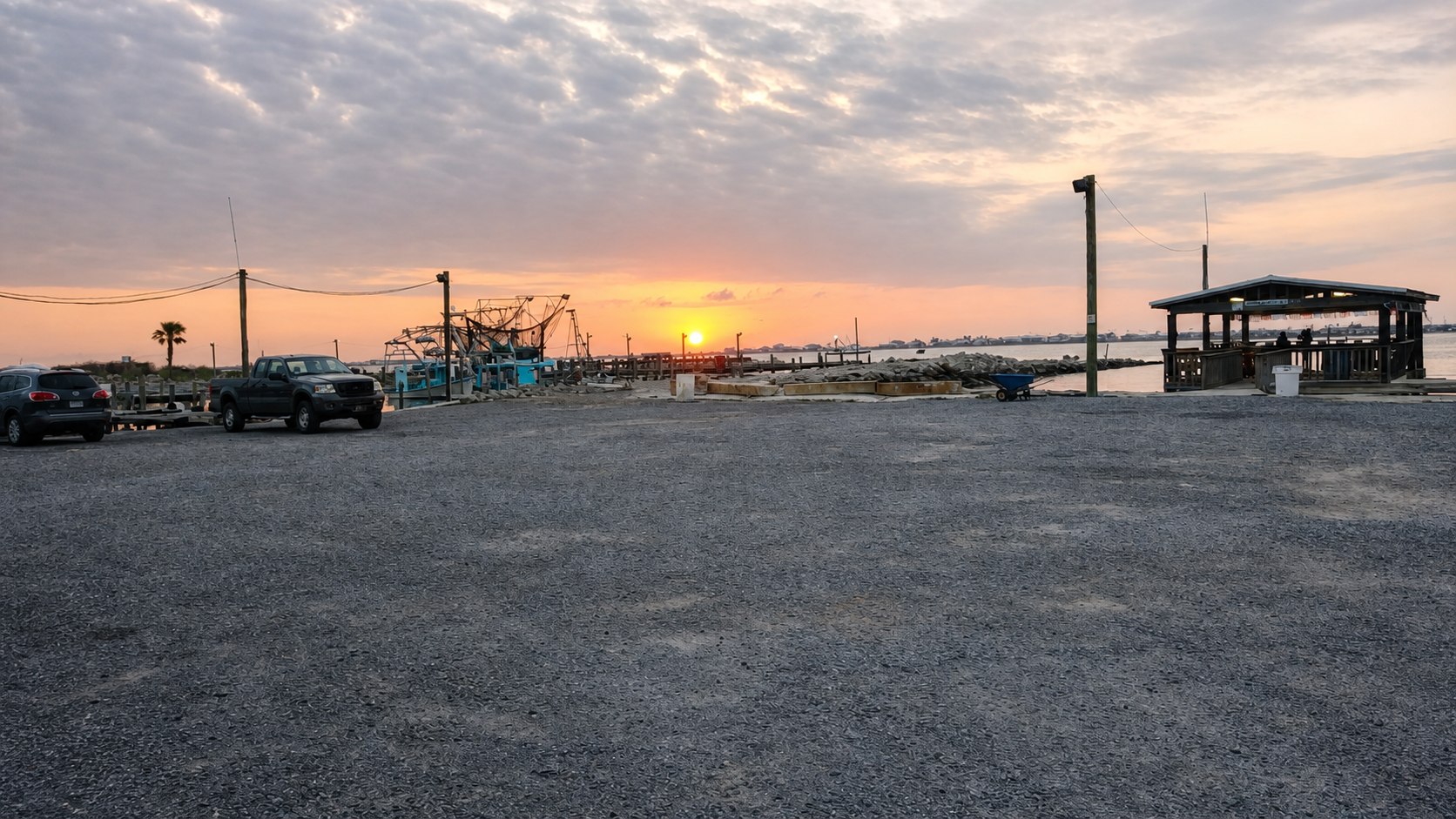
These were not polished answers delivered across a conference table. They came between trailer straps, bait runs, boat washdowns, and conversations that usually started with some version of, “How’d y’all do?”
They came from people who spend their available time trying to put trout, redfish, crabs, or something else worth carrying home in the ice chest.
Fishing Is Still How Louisiana Gathers
When recreational fishermen talk about the role fishing plays in Louisiana, the conversation rarely stays limited to catching fish.
It becomes a conversation about families, neighborhoods, bait shops, seafood markets, marinas, local restaurants, and the gatherings that often follow a successful trip.
One good catch can become a fish fry. A mess of crabs can put half the neighborhood in somebody’s backyard. A few ice chests of shrimp can turn an ordinary afternoon into a family boil.
Fishing provides the reason, but the gathering is often the larger tradition.
The economic connections matter too. Recreational fishermen buy bait, ice, fuel, tackle, food, boat parts, repairs, and launch access. Charter customers travel into coastal communities and spend money with businesses that depend on the water. Commercial fishermen supply seafood markets, restaurants, processors, and families throughout the state.
The roles are different, but the broader coastal economy is connected.
“Take fishermen out of Louisiana, and the state loses part of its soul.”
A recurring dockside view
“No Marsh, No Fish”
One line from these conversations stayed with me more than any other: “No marsh, no fish.”
It is not a technical explanation, but it captures how many recreational anglers understand the coast.
The wetlands provide nursery habitat for shrimp, crabs, baitfish, and young fish. Grass beds, shallow ponds, protected shorelines, drains, and small bayous all contribute to the system that supports redfish, speckled trout, and the broader food chain.
When that habitat disappears, fishermen expect the effects to eventually show up in the fisheries. They also see the marsh as protection.
Every acre lost leaves less land and vegetation between coastal communities and water driven inland by a hurricane. To the fishermen raising this concern, habitat restoration and storm protection are not separate subjects. They are two reasons to protect the same coast.
They may not use the language heard in scientific presentations or government planning meetings, but their point is direct: Louisiana cannot continue losing marsh without eventually losing fishing opportunity, community protection, or both.
Common Ground
What kept coming up
- Protect the marsh and keep the water productive.
- Explain rules in language ordinary fishermen can use.
- Preserve reasonable access while recognizing Louisiana’s property law.
- Include fishermen’s observations without treating a few trips as fisheries science.
Rules Have to Make Sense on the Water
The fishermen I spoke with did not claim to know every scientific study, stock assessment, management model, or regulatory process.
Most acknowledged that healthy fisheries require limits and that conservation sometimes means accepting shorter seasons, reduced harvest, or other restrictions.
Their frustration was less about the existence of rules and more about whether those rules feel understandable, balanced, and connected to conditions fishermen observe on the water.
Several expressed the belief that regulators do not always hear enough from people who fish regularly. At the same time, personal experience from a few successful or unsuccessful trips cannot replace broader fisheries data.
Both things can be true.
Science has to guide management, but fishermen are less likely to trust a decision when they do not understand how it was reached or believe their observations were heard.
The recurring request was not for fewer regulations. It was for clearer explanations, meaningful public involvement, consistent enforcement, and rules ordinary fishermen can understand without needing to study legal language before every trip.
Access Is Becoming a Constant Concern
Public access came up repeatedly.
Fishermen talked about orange paint, private-property signs, blocked routes, and waterways they remember using before ownership or enforcement became more visible.
Some described tidal canals or natural-looking waterways they believed should remain accessible. Others admitted they were not always sure where public water ended and private property began. That uncertainty is part of the problem.
Louisiana’s coastal access questions involve private property, navigability, erosion, liability, and state law. A waterway that appears public is not necessarily public under Louisiana law.
Still, the concern heard at the dock is real. Fishermen worry that access will continue narrowing until large parts of the coast become practically unreachable without a lease, private permission, or specialized knowledge of property boundaries.
“A regular guy shouldn’t need a law degree just to know whether he can turn into a canal on a Saturday morning.”
A recreational fisherman
That does not settle the legal argument. It does explain why the issue continues to frustrate recreational anglers.
The question beneath many of these conversations is simple: How much of Louisiana’s coast will the public still be able to reach a generation from now?
Commercial and Recreational Fishermen Share More Than They Admit
Commercial and recreational fishermen often meet each other from opposite sides of a debate.
They argue over limits, seasons, access, allocation, habitat projects, enforcement, and which group carries more responsibility when a fishery declines.
But the fishermen reflected in these conversations kept returning to the same basic needs. Both groups depend on productive water. Both need healthy habitat. Both are affected when access disappears. Both rely on public confidence in Louisiana seafood and fisheries management. Both want something worth passing to their children and grandchildren.
Their interests will not always be identical. A commercial fisherman earning a living from the water and a weekend angler trying to catch dinner do not face the same pressures.
But neither has much of a future if the marsh disappears, the water becomes unproductive, or fishermen lose the ability to reach it.
The recurring message was to buy local seafood, take children fishing, pay attention to regulations and public meetings, and speak up when habitat or access is threatened instead of assuming someone else will protect Louisiana’s fishing culture.
Why These Conversations Belong in the Record
None of the fishermen represented here claimed to have every answer.
They were not offering a formal coastal plan or presenting scientific testimony. They were talking about what they see, what worries them, and what they hope will remain for the next generation.
Their concerns were not identical, but the common ground was difficult to miss: protect the marsh, keep the water productive, make the rules understandable, preserve reasonable access, and stop treating every coastal issue as though one group must lose for another to win.
Those ideas will not settle Louisiana’s fisheries or access debates, but they are part of the public record those debates should include.
Public officials, scientists, commercial fishermen, charter captains, landowners, and organizations all have important perspectives. So do the people launching a boat before daylight, buying a cup of shrimp at the bait shop, or strapping down a trailer after a Saturday on the water.
Those fishermen belong in Where Fishermen Fit, too.
About Dock Talk
Dock Talk is part of Where Fishermen Fit, an ongoing series from LAInshore.com documenting perspectives from across Louisiana’s fishing and coastal communities.
Unlike formal Five Questions interviews, Dock Talk pieces draw from informal conversations, notes, and recollection. When several conversations are combined, LAInshore.com organizes them around recurring themes and does not present them as transcripts or as the exact words of one individual.
If you are connected to Louisiana’s fisheries, wetlands, seafood industry, coastal access, or working-water communities and would like to participate in Where Fishermen Fit, contact Eddie Smith at e.smith@bluecollarmarine.com.
Previous in the series: Rep. Joe Orgeron on Wetlands, Fisheries, Public Access, and Louisiana’s Coastal Future
Reader Response
Have a local correction, firsthand detail, or respectful response?
Send it to LAInshore.com. Include the article title, what you saw or know, and any source, photo, document, or public record that helps verify it. Useful reader responses may inform corrections, updates, or follow-up reporting.
Send a response