Interview File
About This Interview
- Participant
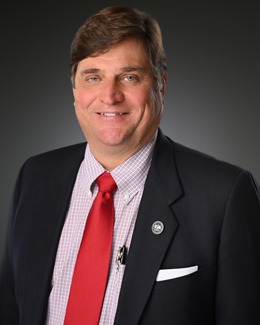
- Rep. Joseph A. “Joe” Orgeron
- Office
- Louisiana House District 54, representing parts of Jefferson and Lafourche parishes
- Interview Format
- Same five questions asked of each participant
- Series
- Where Fishermen Fit — Interview 002
Series Note
Editor’s Note
This interview is part of LAInshore.com’s Where Fishermen Fit series. Every participant receives the same five questions about Louisiana’s fisheries, coastal communities, conservation, public access, and working-water traditions.
Responses have been lightly edited for clarity and readability while preserving the participant’s meaning and intent. Technical terms were standardized in reporter text where appropriate. Quoted language reflects the speaker’s wording. Publication does not imply endorsement by LAInshore.com. The purpose of this series is to give readers a consistent way to compare perspectives from people connected to Louisiana’s coast.
A Representative From Louisiana’s Working Coast
Rep. Joe Orgeron represents a stretch of south Louisiana where commercial fishing, recreational angling, offshore energy, seafood production, and coastal restoration are not abstract policy issues. They are part of the local economy and daily life.
In his answers to LAInshore.com’s five questions, Orgeron repeatedly returned to one central idea: Louisiana’s fisheries and coastal communities depend on the estuary, and the estuary depends on restoring the natural processes that built south Louisiana.
His comments covered shrimping, oysters, alternative oyster culture, recreational fishing, seafood markets, sediment diversions, public access, private property, liability, and the difficult balance between short-term disruption and long-term restoration.
More than anything, Orgeron framed Louisiana’s coastal future as a question of whether the state is willing to reconnect the Mississippi River to the wetlands that once depended on it.
Question One
What role do Louisiana commercial and recreational fishermen play in the identity, economy, and culture of this state?
For Orgeron, the answer begins with the economy of lower Lafourche.
He described commercial fishing and recreational fishing as major parts of the region’s identity, alongside offshore energy and agriculture.
“A very large one. In District 54, the economy, I always like to say, is oil and gas probably predominantly, commercial fishermen secondarily. Recreational fishing is a big portion with all the charter guides and the marinas that we have, and of course sugarcane agriculture is the other one. So it plays a predominant role.”
Rep. Joe Orgeron
Orgeron pointed first to shrimping, then to the oyster industry, including both traditional oyster harvest and newer methods of alternative oyster culture.
“I think the shrimping is important. We’ve always had traditional bottom oystering, but now we’re expanding into a lot of AOC, Alternative Oyster Culture, in cages. That’s becoming a big component.”
Rep. Joe Orgeron
He also noted that lower Lafourche remains tied to offshore commercial fisheries that supply seafood beyond the local dock.
“We still have a few players in Leeville who run snapper boats, commercial longline fishing boats, that catch grouper and snapper that end up in some of the premier restaurants in New Orleans.”
Rep. Joe Orgeron
To Orgeron, the commercial side of fishing remains one of the defining parts of his district’s economy.
“All huge portions of our lower Lafourche economy. Very important, at least the commercial fishing aspect.”
Rep. Joe Orgeron
His answer placed recreational fishing and commercial fishing beside each other, not as identical industries, but as connected pieces of the same coastal economy.
Question Two
Why are Louisiana’s wetlands important to both working-water families and recreational anglers?
This was the longest and most detailed part of the interview. Orgeron’s answer moved from fish habitat to storm protection, from shrimp and trout to the Mississippi River, and from today’s marsh loss to the geological history of south Louisiana.
He began with a simple point: the wetlands are the nursery.
“Simple enough, because they are the estuarial nursery for many of the species that we love, whether it’s white shrimp, brown shrimp, oysters, redfish, speckled trout, all of the species, even the menhaden.”
Rep. Joe Orgeron
Orgeron specifically mentioned the Terrebonne and Barataria basins, which he described as both highly productive and rapidly eroding.
“Despite being a pelagic species, menhaden requires the estuarial wetlands of what I like to think of as the Terrebonne and Barataria basins. Two of the most productive basins that are also two of the most rapidly eroding.”
Rep. Joe Orgeron
He used the phrase “estuarial necrosis” to describe what he sees as the slow decline of the estuary after the Mississippi River was cut off from regularly delivering sediment into the marsh.
“Two of the most rapidly eroding, going through what I call an estuarial necrosis, ever since we contained the mighty Mississippi back in the early 1930s and stopped the annual overflow of the Mississippi River.”
Rep. Joe Orgeron
According to Orgeron, south Louisiana’s land base was created by the river over thousands of years.
“That ultimately was what built everything from Baton Rouge on down. It was built over the last two, three, four thousand years of river splay — basically the fire-hose-on-the-ground action of the Mississippi River dumping sediment and creating all the land that we live on.”
Rep. Joe Orgeron
He continued:
“Every ounce of dirt that we currently live on is pretty much something that was transported by the Mississippi River.”
Rep. Joe Orgeron
That history led Orgeron back to restoration. He argued that reconnecting the river is necessary to restore the ecological process that supports both fisheries and communities.
“Reconnecting that river in order to re-jigger that estuarial process…”
Rep. Joe Orgeron
Orgeron said levees and other structural protections are important, but he does not believe they are enough by themselves.
“We’ve got levees. We’ve got structural protections for our communities. Hurricane Ida showed that.”
Rep. Joe Orgeron
In his view, the marsh outside the levee system provides a critical layer of storm protection.
“Those structural protections require an attenuating factor of storm surge only provided by the Louisiana marsh that’s right outside of those protective levees.”
Rep. Joe Orgeron
As that marsh disappears, Orgeron said, the protection value declines.
“As that marsh degrades with this estuarial necrosis, we’re actually losing the value of that protection. Those levees become more and more vulnerable.”
Rep. Joe Orgeron
For Orgeron, reconnecting the river is not only about land building. It is also about preserving communities, storm protection, fisheries, and the broader culture tied to Louisiana’s coast.
“Reconnecting the river into the estuary helps preserve the resiliency and longevity of our communities, as well as re-jigger the natural ecological process of keeping all the species that we live and count on, especially redfish, speckled trout, the shrimp, the minnows and everything else.”
Rep. Joe Orgeron
He acknowledged that the answer reached far back into Louisiana’s history, but said that history matters because the current coastal system cannot be understood without understanding how it was built.
“That’s the full capture of all the way back to 5,000 years ago, where this was all open water.”
Rep. Joe Orgeron
Orgeron then connected that history to one of the state’s most debated coastal restoration issues: sediment diversions.
He said some commercial shrimpers opposed river diversions because of concerns about freshwater impacts, but he argued that view focuses too much on the short term.
“The commercial shrimpers were some of the ones who were vehemently against the river diversions or reconnecting the river. To me, they just looked at the short term: ‘Oh, you add fresh water in the basin, I’m not going to be able to catch as much shrimp. Therefore, I’m against it.’”
Rep. Joe Orgeron
Orgeron said he believes that misses the larger point.
“You’re missing the point that it reestablishes basically what we need to be able to continue this type of life.”
Rep. Joe Orgeron
Background: Sediment Diversions
Sediment diversions are among the most debated coastal restoration tools in Louisiana. Supporters argue that reconnecting the Mississippi River to nearby basins can help rebuild and sustain wetlands by moving fresh water, sediment, and nutrients into areas historically shaped by the river. Critics, including some oyster and commercial fishing interests, have raised concerns about salinity changes, fishery impacts, and the effect on existing businesses.
Rep. Orgeron’s comments reflect his own position in that debate.
Question Three
What should Louisiana prioritize when balancing coastal recreation, fishery management, commercial livelihoods, recreational access, private property, and environmental protection?
Orgeron said Louisiana should prioritize science-based coastal restoration.
He expressed support for the work historically done through the Coastal Protection and Restoration Authority, while also saying he believes the process has recently become more political.
“I think what CPRA has been doing had been all science-based and science-driven, and I believe it’s recently got just a little political with the cancellation of the diversions.”
Rep. Joe Orgeron
Orgeron said Louisiana should return to a process that focuses on reconnecting the Mississippi River and putting science back at the center of the state’s coastal plan.
“Unfortunately, I think we should go back and re-jigger the process of reconnecting the river in order to be able to put the science back into our plan.”
Rep. Joe Orgeron
He acknowledged that the oyster industry has been one of the main opponents of certain diversion projects.
“I know that the oystermen were a primary antagonist of those particular projects.”
Rep. Joe Orgeron
Orgeron said his view is that mitigation money should help affected businesses relocate or reestablish operations in areas that better match restored estuarine conditions.
“There was mitigation money. They would be pushed back. They claim they’ve been doing this for five generations, and my position is, well, five generations ago, your great-grandfathers were not harvesting oysters in the same places you’re harvesting today.”
Rep. Joe Orgeron
He framed mitigation not as an end to the oyster industry, but as a way for it to move with the changing estuary.
“The mitigation money is for you to reestablish and reconnect with your heritage and move back to basically where you were connecting to the oysters.”
Rep. Joe Orgeron
Orgeron then broadened the point beyond oysters. He said shrimpers and fishermen also need to consider the long-term ecological process that made Louisiana’s fisheries productive.
“The shrimpers and the fishermen need to realize that that reconnection and the building back of the natural ecological process is what made Louisiana Sportsman’s Paradise.”
Rep. Joe Orgeron
He again returned to his view that Louisiana has been managing decline rather than reversing it.
“All we’ve been doing is managing a slow death of it.”
Rep. Joe Orgeron
Orgeron said the state needs to reverse that pattern.
“Basically, we need to reverse that and take it off life support and let it live.”
Rep. Joe Orgeron
That line captures one of the clearest themes of the interview. In Orgeron’s view, coastal restoration should not simply slow loss, but restore the natural function of the estuary where possible.
Question Four
Are there any fisheries, access, coastal, or working-water issues you believe Louisiana residents should be watching more closely?
Orgeron pointed to one of the most complicated subjects in Louisiana’s coastal debate: public access, private property, and state water bottoms.
He said many Louisiana sportsmen look at other states and believe that if water ebbs and flows, the public should have access. But he said Louisiana’s legal and property history creates a different situation.
“I know lots of Louisiana sportsmen like the way that other states have anywhere that the water ebbs and flows, they should have access to. But Louisiana is unique in several ways. Parishes, not counties. Napoleonic law, not common law.”
Rep. Joe Orgeron
He said private ownership, taxation, leases, erosion, and restoration all create a difficult legal landscape.
“With that, taxation of a lot of swamp areas that are privately owned and leased and things like that. We have a unique situation.”
Rep. Joe Orgeron
Orgeron said he has been in contact with state agencies about the issue, specifically the Department of Conservation and Energy and the Louisiana Department of Wildlife and Fisheries.
“I’m in close contact with both Conservation and Energy, formerly the DENR group, as well as Wildlife and Fisheries, and they all fully understand that we have a unique situation.”
Rep. Joe Orgeron
The Department of Conservation and Energy was formerly known as the Department of Energy and Natural Resources, or DENR, before the agency was renamed in 2025.
One complication, Orgeron said, is that land can erode into water, potentially become state water bottom, and later be rebuilt through a restoration project.
“As we lose marsh, and it becomes water bottoms, and then we do reclamation projects, coastal projects, and they become land again — you’re moving from ownership of private ownership, where taxes are paid, lost to degradation and erosion, become water, property of the state as water bottoms, and then subsequently going back and forth.”
Rep. Joe Orgeron
Orgeron said that creates difficult questions about ownership and public access.
“We have some real unique challenges on how to make that.”
Rep. Joe Orgeron
He said he is interested in working with large landholding companies, sportsmen’s groups, and the state to find ways to open more areas of Louisiana’s coast to public use.
“I’m very interested in working with the large land companies — companies like Apache, ConocoPhillips, Castex, Miami Corporation, Biloxi Marsh Lands, and others that own large areas many people lease or call private lands, but others would like to be able to fish — to figure out a way to open up more of Louisiana Sportsman’s Paradise to more of the public.”
Rep. Joe Orgeron
But he also said liability is a major obstacle.
If private companies allow public access and someone is injured while traveling through a canal or striking submerged infrastructure, Orgeron said those companies need protection from liability.
“Those companies that make those areas available, to shield those companies from liability, should someone be traveling down what was once a closed private canal and they hit a flowline.”
Rep. Joe Orgeron
He said public access may come with personal risk, and that risk needs to be understood.
“They need to realize that having access to that comes at their own risk.”
Rep. Joe Orgeron
According to Orgeron, liability is one of the reasons private landowners and companies may keep areas closed.
“It’s part of the reason why these private companies are not opening it up to public use.”
Rep. Joe Orgeron
He said there is no simple answer.
“I wish there was a simple answer to that problem, but I’ve spoken to some of the best legal minds, and the short answer is there is no simple answer.”
Rep. Joe Orgeron
Still, Orgeron said he is willing to work on it.
“This will take a while, so there’s a lot of effort that needs to be put to come to an agreement on how we could get there.”
Rep. Joe Orgeron
He added:
“I’m willing to sit down and spend my legislative time crafting what needs to be done between these land managers, the sportsmen’s coalitions, and the state, in order to make those things happen.”
Rep. Joe Orgeron
Background: Public Access and Private Water
Public access in coastal Louisiana is one of the state’s most complicated outdoor issues. It involves private land ownership, navigable waters, erosion, mineral activity, coastal restoration, liability, leases, and state water-bottom questions. Orgeron’s answer reflects the difficulty of balancing more public access with private property rights and landowner liability concerns.
Question Five
What message would you like to share with Louisiana fishermen, seafood workers, guides, anglers, and coastal families trying to protect both their livelihoods and their traditions?
Orgeron’s final answer was one of the most direct responses in the interview, and it is presented here as his view.
He urged commercial fishermen to reconsider blanket opposition to certain conservation groups and coastal restoration projects.
“Commercial fishermen, stop with the blind hatred of CCA. I don’t understand it.”
Rep. Joe Orgeron
He also said commercial fishermen should be cautious about assuming their interests always align with the oyster industry.
“Stop being co-opted by the oyster industry. Sometimes their interests are not congruent with your own. Case in point, the diversions.”
Rep. Joe Orgeron
Orgeron returned again to sediment diversions and river reconnection, saying he believes they can be managed in a way that rebuilds wetlands while reducing harm to fisheries.
“I think building the diversions and using proper operational management of the diversions to optimize the advantage of rebuilding the wetlands, while doing it in a way not detrimental to the fisheries…”
Rep. Joe Orgeron
He argued that marsh loss and shallow open water can benefit some oyster interests, but not necessarily the broader coastal community.
“Really, the only ones that benefit from more marsh loss and more open water, shallow open water, is the oyster industry.”
Rep. Joe Orgeron
Orgeron said he believes affected oyster interests should be compensated and helped to relocate where appropriate.
“They unfortunately need to be moved and appropriately paid to mitigate and move themselves back to the historical areas.”
Rep. Joe Orgeron
His closing message returned to the same central argument that shaped most of the interview: Louisiana needs to reconnect the river and rebuild the estuary.
“We can re-jigger, reconnect the river, and reestablish a proper estuarial ecosystem that makes all of the stakeholders that you mentioned be in a better place.”
Rep. Joe Orgeron
Reporter’s Takeaway
Rep. Joe Orgeron kept returning to the same foundation: the estuary. Across all five questions, he described wetlands not as a side issue, but as the base beneath Louisiana’s fisheries, coastal economy, storm protection, and working-water traditions.
His answers were detailed and direct. He expressed strong support for reconnecting the Mississippi River to coastal basins, concern that coastal restoration has become more political, frustration with some opposition to sediment diversions, and interest in addressing public access through conversations among landowners, sportsmen, and the state.
The central thread was consistent: in Orgeron’s view, Louisiana cannot protect fishing traditions, commercial livelihoods, recreational access, and coastal communities without restoring the wetlands and estuarine processes that support them.
Readers may agree or disagree with his conclusions. The purpose of this series is not to resolve those debates in one interview. It is to document where different voices stand, in their own words, using the same five questions asked of every participant.
About Where Fishermen Fit
LAInshore.com’s Where Fishermen Fit series asks elected officials, commercial fishermen, charter captains, marina owners, bait shops, scientists, conservation voices, seafood workers, and others connected to Louisiana’s coast the same five questions:
- What role do Louisiana commercial and recreational fishermen play in the identity, economy, and culture of this state?
- Why are Louisiana wetlands important to both working-water families and recreational anglers?
- What should Louisiana prioritize when balancing coastal recreation, fishery management, commercial livelihoods, recreational access, private property, and environmental protection?
- Are there any fisheries, access, coastal, or working-water issues you believe Louisiana residents should be watching more closely?
- What message would you like to share with Louisiana fishermen, seafood workers, guides, anglers, and coastal families trying to protect both their livelihoods and their traditions?
By asking each participant the same questions, LAInshore.com aims to build a long-term record of how people across Louisiana’s coastal community understand the issues shaping the future of the state’s fisheries, wetlands, access, and working-water culture.
If you are connected to Louisiana’s fisheries, wetlands, working-water communities, seafood industry, coastal access, or outdoor culture and would like to be considered for LAInshore.com’s Where Fishermen Fit series, contact Eddie Smith at e.smith@bluecollarmarine.com.
Reporting Note
This interview was conducted by Eddie Smith for LAInshore.com. The transcript was lightly edited for clarity, readability, grammar, and flow. Technical terms were standardized in reporter text where appropriate. Quoted language reflects the speaker’s wording. No endorsement is implied by publication.
Previous in the series: Representative Neil Riser on Conservation, Culture, and Louisiana’s Outdoor Future
Reader Response
Have a local correction, firsthand detail, or respectful response?
Send it to LAInshore.com. Include the article title, what you saw or know, and any source, photo, document, or public record that helps verify it. Useful reader responses may inform corrections, updates, or follow-up reporting.
Send a response